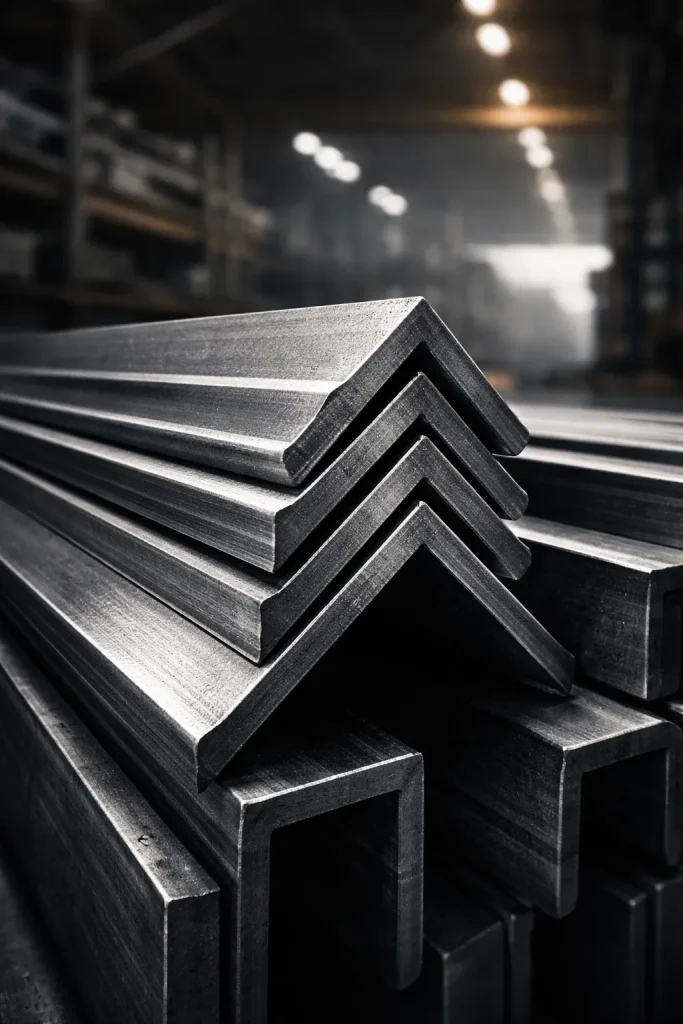
**Angle steel** is one of the most widely used steel sections in the construction and metal structures industry. It consists of two perpendicular legs and is typically produced in an **L‑shaped** profile. Due to its simple yet strong geometry, angle steel is extensively used in various parts of structures for connections, corner reinforcement, and enhancing overall structural strength.
Angle sections are generally manufactured through the **hot rolling** process and are supplied in a wide range of sizes, thicknesses, and lengths. They are produced in two main types: **equal‑leg angles** and **unequal‑leg angles**, each selected based on specific project requirements. Choosing the appropriate type of angle plays a critical role in ensuring structural performance and stability.
From a technical perspective, angle steels offer suitable resistance to both compressive and tensile forces. Their geometric shape makes them highly effective for reinforcing joints and structural corners. In addition, their ease of cutting, drilling, and welding makes angle steel a practical and efficient option for construction and industrial applications.
Angle steel has extensive applications in the construction of steel building frameworks, trusses, frames, lightweight steel structures, bridges, and industrial equipment. It is also widely used in smaller civil projects, as well as in the fabrication of metal shelving, frames, and supporting structures.
Given the important role of angle steel in creating strong connections and improving structural stability, manufacturing this product in compliance with quality standards is essential. High strength, dimensional variety, and versatility across different projects have made steel angles a fundamental component in the construction industry and in the production of metal structures.